Hello! I'm Dimis Michaelides, keynote speaker and author on innovation, creativity and leadership. I have extensive international experience as a business executive and as a speaker in corporate and public events. I also offer workshops and change management consulting for private businesses, NGOs and public organizations.
Experiences with me are out-of-the-ordinary, designed to have a lasting and practical impact. I blend subject-matter expertise with individual client needs, participants' energy and ... a touch of magic!
I do not say I am internationally acclaimed, entertaining, amazing, motivational or inspirational. My clients do.
Contact me HERE to book a keynote or a workshop. Or for a conversation on your innovation journey or next event.
Experiences with me are out-of-the-ordinary, designed to have a lasting and practical impact. I blend subject-matter expertise with individual client needs, participants' energy and ... a touch of magic!
I do not say I am internationally acclaimed, entertaining, amazing, motivational or inspirational. My clients do.
Contact me HERE to book a keynote or a workshop. Or for a conversation on your innovation journey or next event.
MORE ON DIMIS - READ here
Dimis Michaelides
|
Brief bio
Dimis Michaelides is a keynote speaker, author and trainer on innovation, creativity and leadership. He also works as a consultant with private and public organizations on customized change projects, which may be long term assignments or brief interventions.
Dimis has extensive international experience in General Management, Marketing and Finance - at the World Bank (Washington), Zeneca (Paris), Council of Europe (Paris) and Laiki Cyprialife (Nicosia). He served on numerous Boards of Directors in private companies and non-profit organizations in Cyprus, the US, Russia and Brazil, including the Board of Trustees of The Creative Education Foundation (US). In 2017 Dimis was named Ambassador of Knowledge by Lifelong Learning Academia in Slovenia. Dimis published The Art of Innovation - Integrating Creativity in Organizations© (2007, 2011) a model to embed innovation in organizations. He followed this with Leading Innovation in Practice© (2013) a roadmap to guide organizations and individuals to achieve their full innovation potential. He has delivered presentations and led workshops in numerous creativity forums including TEDx (New York), Harvard Business Review (China), Creative Education Foundation (USA), American Creativity Association, CREA (Europe), European Conference for Creativity and Innovation, Africa Creativity Conference, EU Quality Conference (Europe). Dimis has taught as visiting Professor at the Executive MBA programs of INSEAD (Fontainebleau), CK Graduate School of Business (Beijing), Jiaotang University (Shanghai), Royal Holloway University of London, the Cyprus International Institute of Management (CIIM) and Neapolis University, Pafos. Dimis is a graduate of the London School of Economics (B.Sc), London Business School (MBA), Sussex University (MA) and INSEAD (Leadership in Organizations). He is fluent in Greek, English and French, operational in Spanish and Portuguese. Dimis loves his wife and son, mother and brother, music and magic, art and history, film and theater, and his dog, Goya. |
The Art of Innovation at TEDx Gramercy, New York
A keynote on my model for organizational innovation with ... a touch of magic!
A keynote on my model for organizational innovation with ... a touch of magic!
Key insights and tips on business leadership, creativity, innovation and related topics in short video clips often with a little humor and ... a touch of magic!
|
|
|
99 SEC VIDEOS - CLICK HERE
Innovative Teams
Bad News Good News |
How to be creativeIt's not about Picasso & Einstein... |
Method makes Creativity more Effective
Innovation Flavours & Strategic choices |
The Art of Innovation – Integrating Creativity in Organizations.
Organizations innovate in very different ways, but the things that drive innovation are in fact quite similar. This is a model for organizational innovation I developed and published.
Watch a brief animated clip here.
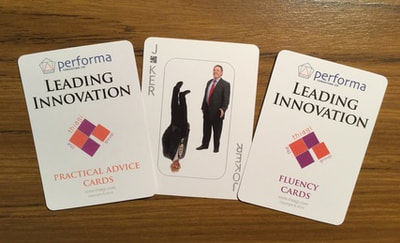
Leading Innovation in Practice.
Each organization must take practical steps to initiate and lead innovation in its own specific context. This is a road map I developed and published to guide organizations in their innovation journeys.
Organizations innovate in very different ways, but the things that drive innovation are in fact quite similar. This is a model for organizational innovation I developed and published.
Watch a brief animated clip here.
Leading Innovation in Practice.
Each organization must take practical steps to initiate and lead innovation in its own specific context. This is a road map I developed and published to guide organizations in their innovation journeys.
THE mODEL - READ MORE here
|
The Art of Innovation model underscores the multi-dimensional leadership required to make innovation happen continuously in an organization. The model forms a framework for keynote presentations, training workshops and consulting projects. Click below for a short animated clip. |
How do you make innovation part of the DNA of an organization?
The Art of Innovation is a model that shows you how. It is presented in a workshop by Dimis Michaelides or by Certified Leaders in a number of countries.
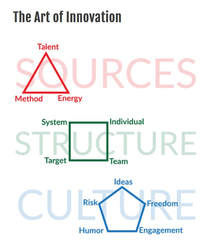
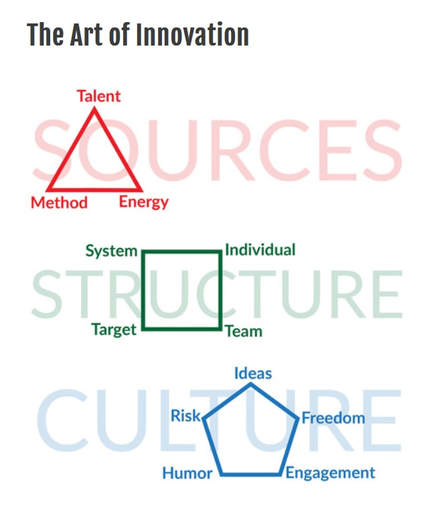
Although organizations innovate in very different ways, the fundamental drivers of innovation are quite similar. The Art of Innovation underscores the multi-dimensional nature of innovation in all organizations and emphasizes the sources of creativity, structure and culture. Twelve innovation drivers are presented: Talent, Energy, Method, Individual, Team, Target, System, Ideas, Freedom, Engagement, Humor and Risk.
The model was published in a book and is summarized in a short animated clip and a TEDx talk.
This methodology was extended to provide an assessment of an organization's innovation potential and enable them to move from analysis to action through Leading Innovation in Practice.
How do you make innovation part of the DNA of an organization?
The Art of Innovation is a model that shows you how. It is presented in a workshop by Dimis Michaelides or by Certified Leaders in a number of countries.
Although organizations innovate in very different ways, the fundamental drivers of innovation are quite similar. The Art of Innovation underscores the multi-dimensional nature of innovation in all organizations and emphasizes the sources of creativity, structure and culture. Twelve innovation drivers are presented: Talent, Energy, Method, Individual, Team, Target, System, Ideas, Freedom, Engagement, Humor and Risk.
The model was published in a book and is summarized in a short animated clip and a TEDx talk.
This methodology was extended to provide an assessment of an organization's innovation potential and enable them to move from analysis to action through Leading Innovation in Practice.
|
The Art of Innovation
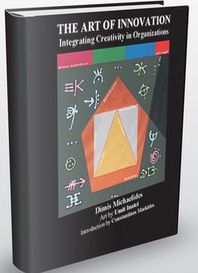
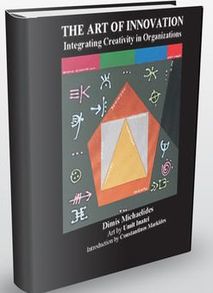
Integrating Creativity in Organizations Performa Productions 2007, 2011 ISBN 978-9963-9380-1-8 Written by Dimis Michaelides with unique artwork and symbols by Umit Inatci and introduced by Professor Constantinos Markides. The book argues that leading innovation is a multi-dimensional affair involving a good understanding of the sources of creativity and establishing appropriate structures and cultures . |
the BOOK - READ MORE here
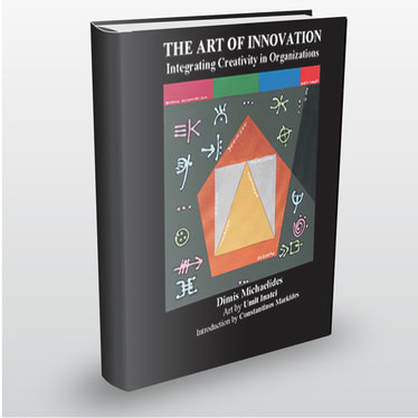
The Art of Innovation – Integrating Creativity in Organizations (Performa Productions 2007, 2011) was written by Dimis Michaelides, with art by Umit Inatci, and an introduction by Constantinos Markides. Presented in a unique and artistic way, this book is about how to promote creativity in organizations.
|
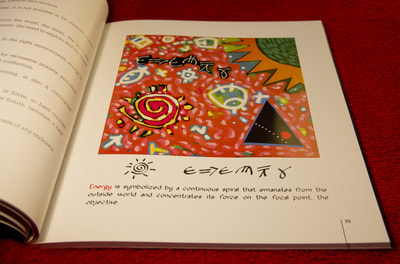
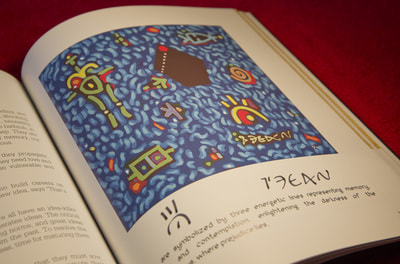
|
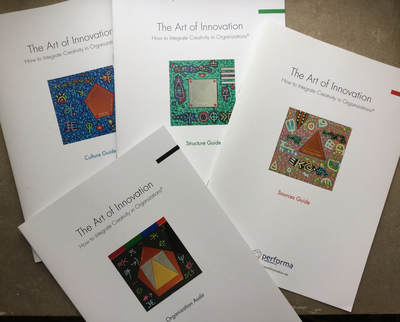
The Art of Innovation presents twelve innovation drivers organized under three categories:
- the SOURCES of creativity: Talent, Energy, Method
- a STRUCTURE to support innovation: Individual, Team, Target, System
- a CULTURE to promote innovation : Ideas, Freedom, Engagement, Humor, Risk
Note on the artist: Umit Inatci brings together East and West in a distinctive style with languages and symbols of his own creation. Umit held numerous solo shows, won many prizes, and published 17 books on art and politics. His works are displayed in private and public collections around Europe.
|
"... this book stands out in the mass of books on innovation. It deserves attention and it deserves to be read by all practitioners interested in integrating innovation in their organizations."
Constantinos Markides
Robert P. Bauman Professor of Strategic Leadership, London Business School
Robert P. Bauman Professor of Strategic Leadership, London Business School
"This is a creativity and innovation book that attracts immediately the unique combination of word and image is a special treat. Buy the book!"
Kobus Neethling
Author and President of the South Africa Creativity Foundation
Author and President of the South Africa Creativity Foundation
"Innovation has become a buzzword bandied about contemporary organizations but few know how to take innovation beyond window dressing. Dimis does. He provides us with concepts that animate and organize the transformation of the creative ideas into innovation products and services, using original art as powerful metaphor."
David Magellan Horth
Past President of the Board of the Creative Education Foundation, and Senior Faculty at the Center for Creative Leadership
Past President of the Board of the Creative Education Foundation, and Senior Faculty at the Center for Creative Leadership
"Through shapes and symbols, pictorials and images, language and ideas, Dimis Michaelides and Umit Inatchi make artfully, yet forcefully, the case for imagination in redesigning business processes and leading change. A must-read by anyone interested in creating an innovative organization."
Theodore Panayiotou
John F. Kennedy School of Government, Harvard University / Director, Cyprus International Institute of Management
John F. Kennedy School of Government, Harvard University / Director, Cyprus International Institute of Management
"A standing reproach to all those who doubt that business can be artistic."
Christopher Hitchens
Author and Contributing Editor to "Vanity Fair"
Author and Contributing Editor to "Vanity Fair"
"Dimis Michaelides makes a valuable contribution to the lexicon of business books on creativity and innovation by approaching the issues from a fresh perspective. This beautiful book will inspire and stimulate you."
Paul Sloane
Author of "The Leader's Guide to Lateral Thinking Skills"
Author of "The Leader's Guide to Lateral Thinking Skills"
My new mini-book is available now!
|
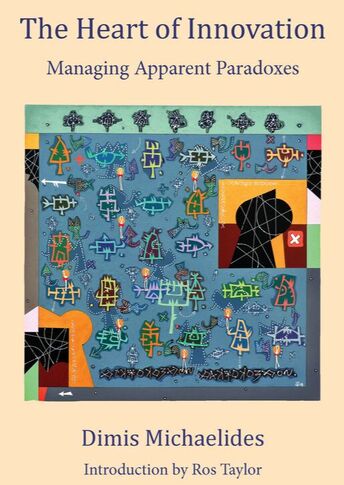
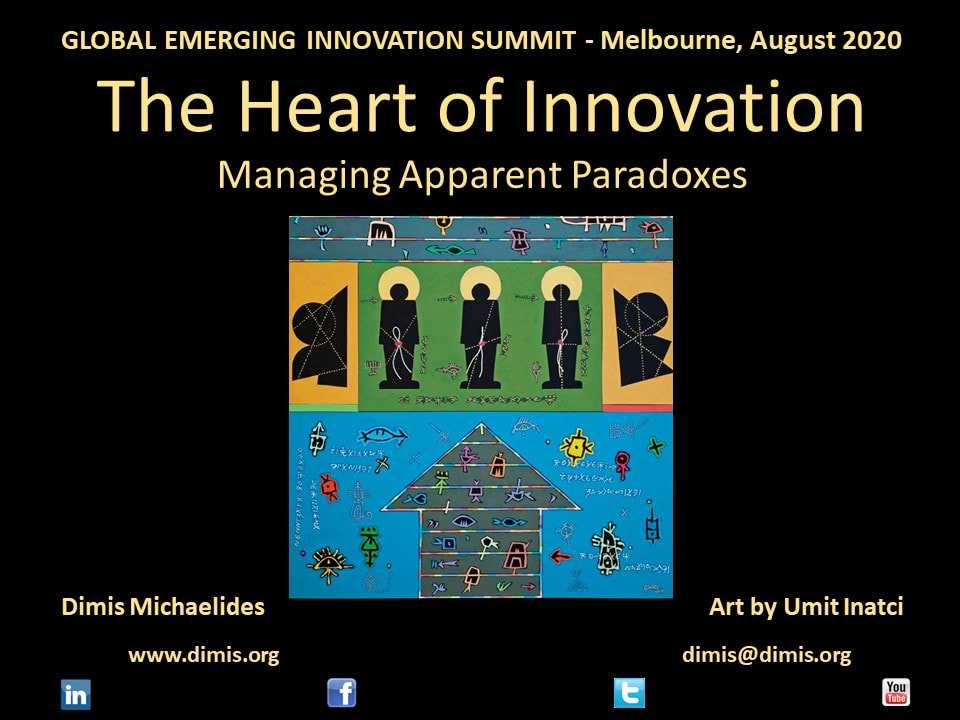
The Heart of Innovation – Managing Apparent Paradoxes ©
This new mini-book focuses on how to manage opposing forces when leading innovation in an organization. Readers will discover why all these forces are all vital to the life of an organization. Through a series of expert tips they will learn how to actively facilitate the co-existence of four paradoxes that matter: a top-down and a bottom-up innovation process, the mobilization of individuals and teams, the balance of change and continuity, and the conscious juxtaposition of imagination and reason. |
Open Events & News
The Heart of Innovation: Managing Apparent Paradoxes
|
Change Management and Innovation in Public Administration
|
|
|
What do 5.0 technology and art have in common!
|
How does the level of knowledge affect the sustainability of an orgnanisation
|
|
|
|
NEW! Forum Discussion / webinar in Greek - organised by the University of the Aegean
COVID-19, Innovation and New Opportunities in the Crisis
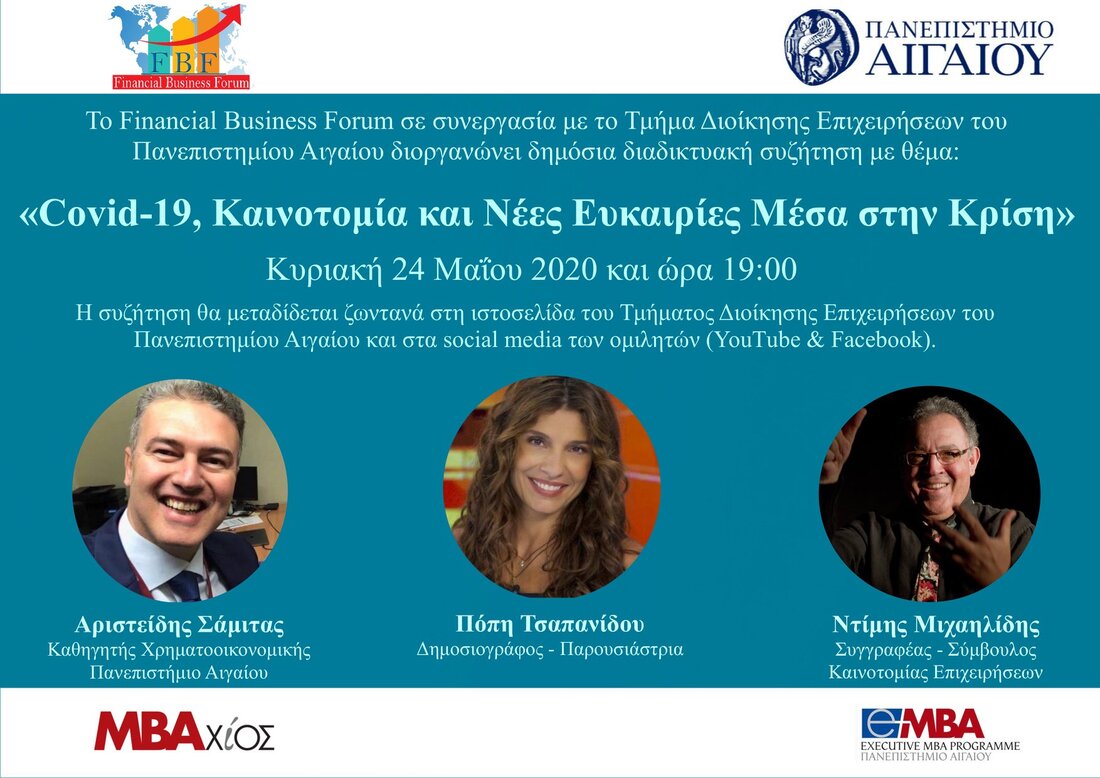
«Covid-19, Καινοτομία και Νέες Ευκαιρίες Μέσα στην Κρίση»
Κυριακή 24 Μαΐου 2020, στις 19:00 : Πρώτη δημόσια συζήτηση στη νέα πλατφόρμα του Τμήματος Διοίκησης Επιχειρήσεων του Πανεπιστημίου Αιγαίου
Παρακολουθείστε την συζήτηση εδώ στο youtube
|
Απαντώντας στις προκλήσεις της πανδημίας του κορονοϊού το Τμήμα Διοίκησης Επιχειρήσεων του Πανεπιστημίου Αιγαίου εγκαινιάζει την νέα πλατφόρμα επικοινωνίας Financial Business Forum (FBF), για ανοικτές και ελεύθερες συζητήσεις της ακαδημαϊκής κοινότητας και των φοιτητών με όλο τον κόσμο των επιστημών. Την Κυριακή 24 Μαΐου ξεκινά με την φιλοξενία της πρώτης δημόσιας διαδικτυακής συζήτησης με θέμα: «Covid-19, Καινοτομία και Νέες Ευκαιρίες Μέσα στην Κρίση» |
Στην συζήτηση συντονίζει η δημοσιογράφος / παρουσιάστρια Πόπη Τσαπανίδου, και δέχεται ερωτήσεις του κοινού, συμμετέχουν οι
• Μιχαηλίδης Ντίμης, Συγγραφέας και Σύμβουλος Καινοτομίας Επιχειρήσεων
• Σάμιτας Αριστείδης, Καθηγητής Χρηματοοικονομικής, Τμήμα Διοίκησης Επιχειρήσεων του Πανεπιστημίου Αιγαίου
Στόχος της συζήτησης είναι να παρουσιάσει στρατηγικές καινοτομίας και εμπειρίες από τη διεθνή και την ελληνική πραγματικότητα για τη δημιουργία νέων επιχειρήσεων, τη βιωσιμότητα τους και να αναδείξει τη σημασία της ευρηματικότητας μέσα και μετά την κρίση πανδημίας Covid-19.
Η συζήτηση μεταδόθηκε ζωντανά από την ιστοσελίδα του Τμήματος Διοίκησης Επιχειρήσεων του Πανεπιστημίου Αιγαίου και στα Κοινωνικά Δίκτυα
Πρακολουθείστε την συζήτηση στο YOUTUBE ΕΔΩ
• Μιχαηλίδης Ντίμης, Συγγραφέας και Σύμβουλος Καινοτομίας Επιχειρήσεων
• Σάμιτας Αριστείδης, Καθηγητής Χρηματοοικονομικής, Τμήμα Διοίκησης Επιχειρήσεων του Πανεπιστημίου Αιγαίου
Στόχος της συζήτησης είναι να παρουσιάσει στρατηγικές καινοτομίας και εμπειρίες από τη διεθνή και την ελληνική πραγματικότητα για τη δημιουργία νέων επιχειρήσεων, τη βιωσιμότητα τους και να αναδείξει τη σημασία της ευρηματικότητας μέσα και μετά την κρίση πανδημίας Covid-19.
Η συζήτηση μεταδόθηκε ζωντανά από την ιστοσελίδα του Τμήματος Διοίκησης Επιχειρήσεων του Πανεπιστημίου Αιγαίου και στα Κοινωνικά Δίκτυα
Πρακολουθείστε την συζήτηση στο YOUTUBE ΕΔΩ
NEW! FREE WEBINAR within World Creativity & Innovation Week 2020
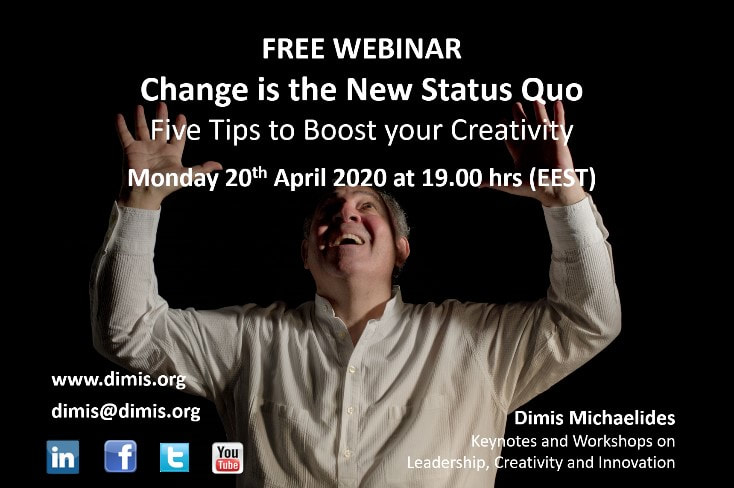
Change is the New Status Quo - Five Tips to Boost your Creativity
Monday 20th April 2020, at 19hrs (EET)
|
|
During this webinar we will offer
• Various insights into different levels of change
• Five tips to boost your creativity
And you will be invited to share your ideas on the challenge: In what ways might work change as a result of the coronavirus crisis?
This 60-minute webinar is free and open to everybody. It will be held in English through the ZOOM platform.
Connect online with a computer or other device with video and audio 5-10 minutes beforehand. You may prompted to download the ZOOM app.
To register please click here: https://zoom.us/webinar/register/WN_FYeyQ2ZxRZycHbKzx3mJEw
Remember my friends, in times of fast change, creativity is your best friend.
• Various insights into different levels of change
• Five tips to boost your creativity
And you will be invited to share your ideas on the challenge: In what ways might work change as a result of the coronavirus crisis?
This 60-minute webinar is free and open to everybody. It will be held in English through the ZOOM platform.
Connect online with a computer or other device with video and audio 5-10 minutes beforehand. You may prompted to download the ZOOM app.
To register please click here: https://zoom.us/webinar/register/WN_FYeyQ2ZxRZycHbKzx3mJEw
Remember my friends, in times of fast change, creativity is your best friend.
NEW! FREE WEBINAR in Greek - offered in collaboration with Viral Growth
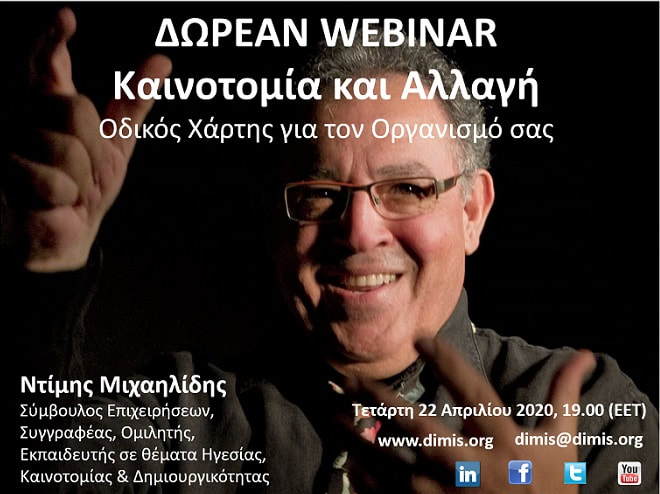
Καινοτομία και Αλλαγή - Οδικός Χάρτης για τον Οργανισμό σας
Τετάρτη 22 Απριλίου 2020, στις 19:00
|
|
Μετά το webinar θα είστε σε θέση να:
• Αναγνωρίζετε τους παράγοντες που προωθούν τη καινοτομία.
• Σχεδιάσετε οδικό χάρτη καινοτομίας για τον οργανισμό σας.
• Αναγνωρίζετε τους παράγοντες που εμποδίζουν τη καινοτομία.
• Πετύχετε αλλαγή κουλτούρας και προσωπική αλλαγή.
Το webinar αυτό θα πραγματοποιηθεί στα Ελληνικά, έχει διάρκεια 75 περίπου λεπτών, είναι δωρεάν και ανοικτό σε όλους
Τετάρτη 22 Απριλίου 2020 στις 19.00
• Αναγνωρίζετε τους παράγοντες που προωθούν τη καινοτομία.
• Σχεδιάσετε οδικό χάρτη καινοτομίας για τον οργανισμό σας.
• Αναγνωρίζετε τους παράγοντες που εμποδίζουν τη καινοτομία.
• Πετύχετε αλλαγή κουλτούρας και προσωπική αλλαγή.
Το webinar αυτό θα πραγματοποιηθεί στα Ελληνικά, έχει διάρκεια 75 περίπου λεπτών, είναι δωρεάν και ανοικτό σε όλους
Τετάρτη 22 Απριλίου 2020 στις 19.00
What people say
READ MORE here
“Dimis is the best Keynote Speaker I have ever seen!”
David Walker, Director of the European School of Administration
“... with Dimis, once is enough, you get hooked for life ...”
Bo Ji, Chief Representative for Europe & Assistant Dean of Global Executive Education, Cheung Kong Graduate School of Business, Beijing
“I wanted customised training for our multinational, multicultural team, and a clear action plan to build on the learnings. Dimis designed well-shaped workshops matching team expectations and facilitated them with amazingly positive energy and enthusiasm.”
Jean Baptiste Boulay, Head of Bayer Cropscience Middle East
“Our company embraced innovation by defining innovation targets and systems to deliver them, then organizing, training and coaching teams to bring creative new solutions to our key business and human challenges. Dimis' guidance in this process was eye-opening, practical, culture-changing and enormously value-adding.”
Dirk Fry, Managing Director, Columbia Shipmanagement
Latest newsletter
|
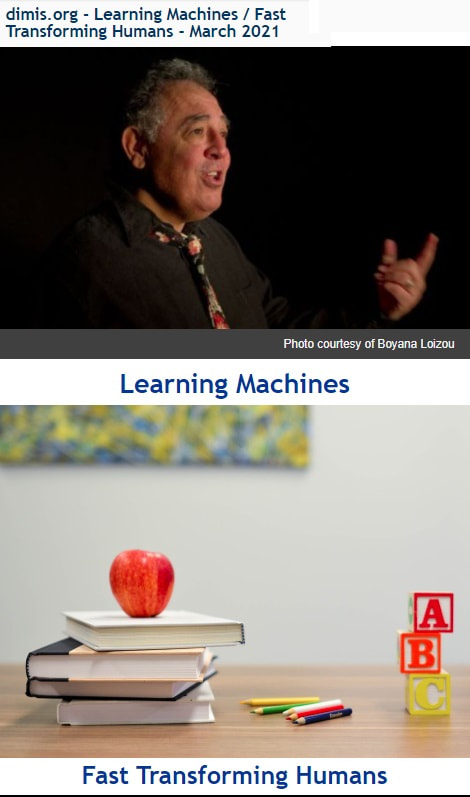
Learning Machines - Fast Transforming Humans
The Learning Machines I am referring to are not the Artificially Intelligent products of humans, but the humans themselves. More learning, learning more The acceleration of the pace of change of the last fifty years and our feeling that change will be even faster in the next fifty years breeds a new type of human. People will spend a smaller part of their working lives delivering value and a larger part learning and innovating. In their jobs they will generate more value in less time because they will be delivering new or improved products and services with new and improved tools and processes. In parallel they will be learning and innovating. The trend is a long-term one starting from the early days of universal education and the continuous rise of years in education before beginning to work. But learning is not just about taking courses at schools. It is also about developing useful skills on and off the job. Formal education will be supplemented by lifelong learning, with more frequent and shorter course often taken remotely. The working day will evolve from 95/5 to 60/40 : if in 2000 people spent 95% of their time at work actually working and 5% learning or innovating, the proportions will shift radically. By 2050, about 60 % of time at work will be spent delivering value to others and 40% learning or innovating. My figures are surely imprecise but the trend is not. In fact it is already happening. |